Your Simple Guide to 21st Mortgage Insurance Requirements
Table of Contents
You just got your loan approval letter from 21st Mortgage, and now there’s a line about insurance you don’t fully understand. Maybe you called and the rep used words like “escrow” and “coverage minimum,” and you nodded along without really following. I’ve talked to buyers who felt this exact same way right before closing day. It’s a confusing moment, and you’re right to want clear answers before you sign anything.
This guide breaks down 21st Mortgage Insurance Requirements in plain language, so you know exactly what to buy, how much coverage you need, and what happens if you miss a step. By the end, you’ll know what your policy has to cover, whether escrow is optional, and how to send proof of insurance without a headache. You’ll also know how much a typical policy costs and what to do the moment coverage lapses. No jargon, no guessing games, just what you actually need to close on time and keep your loan in good standing.
Does 21st Mortgage Require Homeowners Insurance?
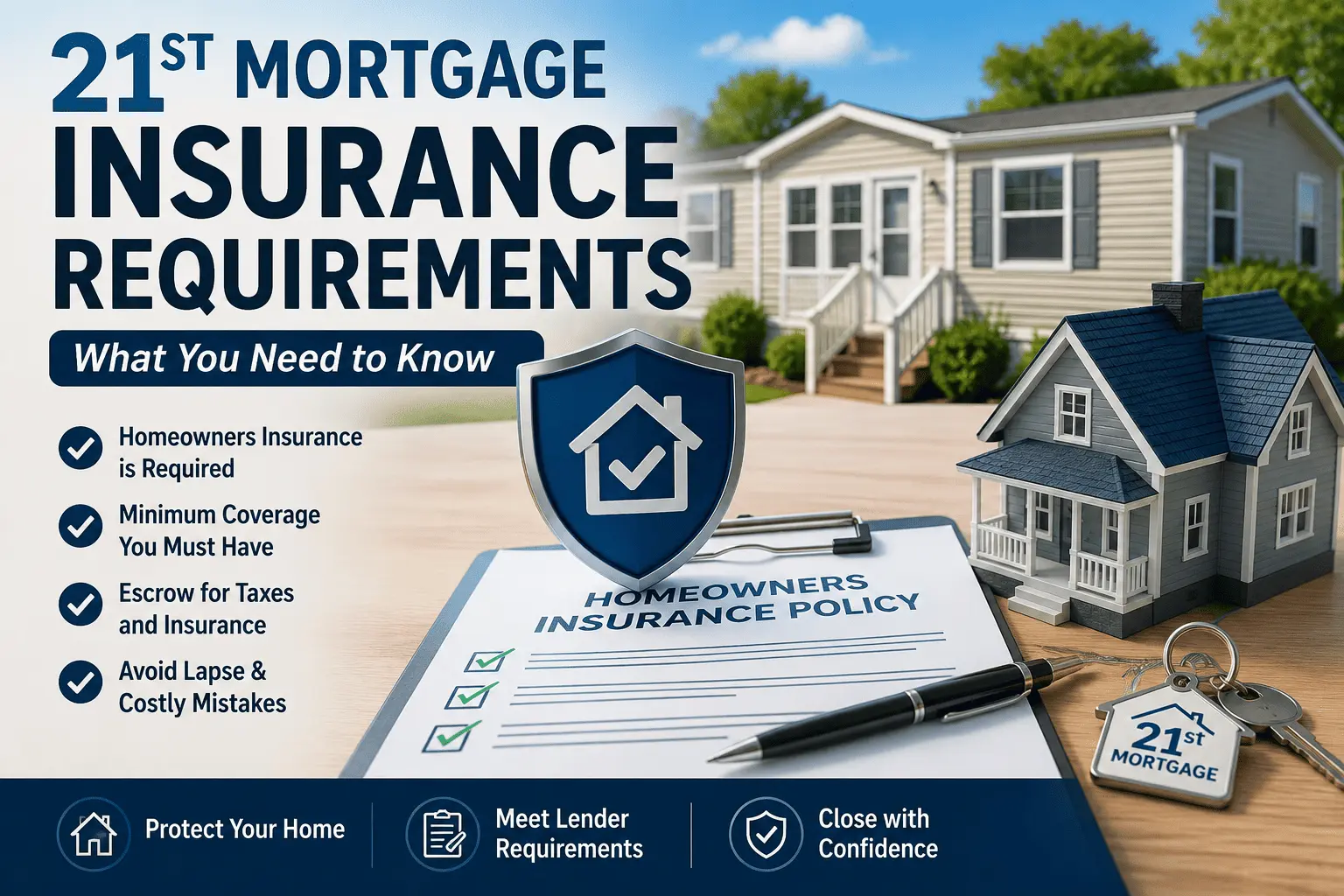
Yes. 21st Mortgage Insurance Requirements start with one simple rule: every loan needs an active homeowners insurance policy before closing. This protects the home against fire, wind, theft, and other covered damage. Since your home is the collateral for the loan, the lender needs proof it’s protected for the entire time you’re paying it off.
Here’s some good news, though. 21st Mortgage does not require private mortgage insurance, or PMI, on loans it originates itself. That’s different from many traditional lenders, who often add PMI when your down payment is low. So while homeowners insurance is mandatory, PMI usually isn’t part of your monthly bill.
Your policy also needs to list 21st Mortgage as the loss payee or mortgagee. This means if something happens to your home, the insurance payout gets issued with the lender’s name on it too. It’s a standard step, and your insurance agent will know exactly what to do once you give them the lender’s name and loan number.
This rule isn’t just paperwork for the sake of paperwork. Manufactured homes can be moved, damaged, or even totaled in ways that site-built homes usually aren’t, so lenders treat this coverage as a core part of loan approval. Skipping this step, or letting it slide after closing, is one of the fastest ways to run into trouble with your loan servicer later on.Even a quick email to james@allthings-mortgage.com with your loan details can help sort out next steps before force-placed coverage kicks in.
Minimum Insurance Coverage Requirements
Buying any policy isn’t enough to satisfy 21st Mortgage Insurance Requirements. Your coverage amount has to hit certain minimums, or the lender can reject the policy and ask for a new quote. Getting this right the first time saves you from delays right before closing.
Dwelling Coverage Amount (Home-Only vs. Land-and-Home Loans)
The coverage amount you need depends on your loan type. For a home-only loan, your policy should cover at least the loan balance or the full replacement cost of the manufactured home, whichever number is higher. For a land-and-home loan, coverage usually needs to include the structure plus any land improvements tied to the mortgage.
| Loan Type | What Coverage Must Include | Typical Minimum |
|---|---|---|
| Home-Only Loan | Manufactured home structure | Loan balance or full replacement cost, whichever is higher |
| Land-and-Home Loan | Home structure plus land improvements | Full insurable value of the combined property |
Knowing which category your loan falls under helps you ask your insurance agent for the right quote the first time.
Replacement Cost vs. Actual Cash Value
There are two ways insurers calculate your payout after a claim, and the difference matters a lot. Replacement cost coverage pays what it actually costs to rebuild or replace your home today, materials and labor included. Actual cash value coverage pays the replacement cost minus depreciation, which means an older home gets a smaller check.
21st Mortgage generally wants a replacement cost policy, not an actual cash value one. This protects both you and the lender if the home is ever a total loss. Ask your insurance agent directly which type you’re being quoted, since the price gap is usually small but the payout gap can be huge.
Does 21st Mortgage Require Flood Insurance?
Flood insurance only comes into play if your home sits in a FEMA-designated flood zone. During the loan process, 21st Mortgage runs a flood determination on the property address. If that report shows a high-risk flood zone, flood insurance becomes mandatory, not optional.
This coverage is separate from your regular homeowners policy, since standard policies don’t cover flood damage at all. You’d buy it through the National Flood Insurance Program or a private flood carrier instead. If your home isn’t in a flood zone, you can skip this step completely, and most manufactured home buyers never need it.
You can check your flood zone status yourself before you even apply, using FEMA’s online flood map tool with your property address. This gives you a heads up on cost, since flood policies can add a few hundred dollars a year to your total insurance bill. Knowing this early helps you budget correctly instead of getting surprised by it mid-way through underwriting.
How Much Does Insurance Cost on a 21st Mortgage-Financed Home?
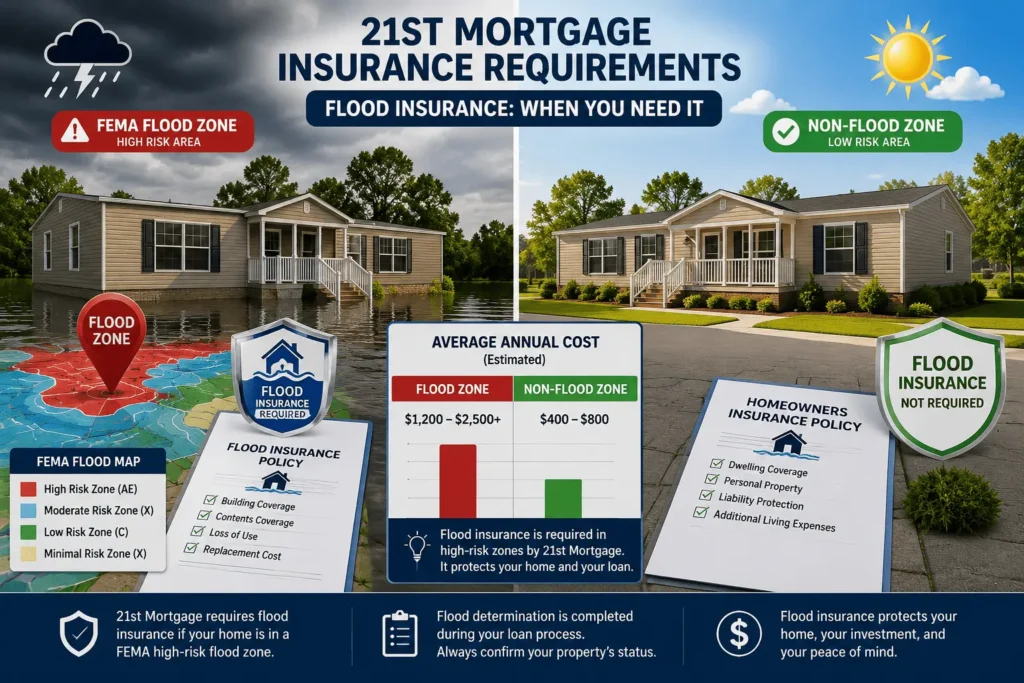
Manufactured home insurance usually costs less than insurance on a traditional site-built house. Most policies run somewhere between $600 and $1,400 a year, depending on your home’s age, size, location, and the coverage amount you choose. Older homes and homes in storm-prone states tend to sit at the higher end.
Your final premium also depends on your deductible choice and any add-ons, like extra liability coverage. A higher deductible usually lowers your monthly premium, but it means more out-of-pocket cost if you ever file a claim. Where the home sits matters too, since homes near the coast or in tornado-prone counties usually carry higher wind and storm premiums than homes in calmer regions.
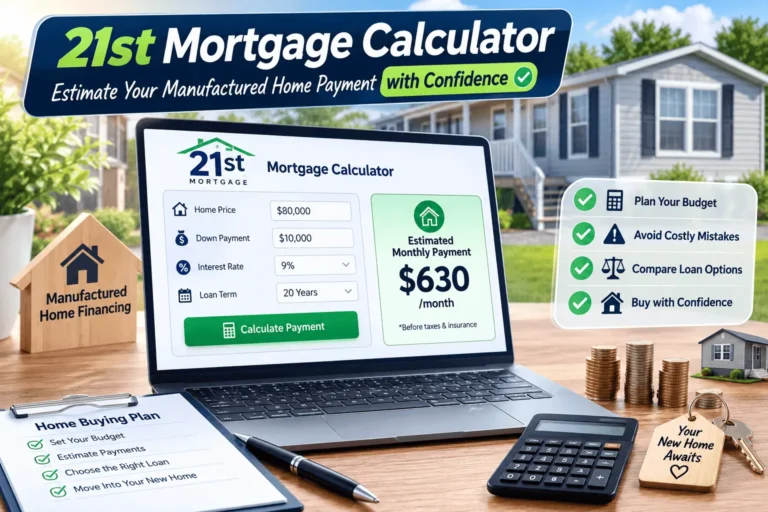
Getting more than one quote before you commit is worth the extra half hour. Two insurers can quote wildly different prices for the exact same coverage on the exact same home. If you want to see how this premium fits into your full monthly payment, the 21st Mortgage Calculator can help you estimate the total number before you commit.
Escrow Account for Taxes and Insurance
Most 21st Mortgage Insurance Requirements come bundled with an escrow account. This account collects a little extra money each month and uses it to pay your property taxes and insurance bill when they come due. It takes one more task off your plate for good.
Think of escrow as a built-in savings plan attached to your mortgage. Instead of scrambling for a large tax bill once a year, you pay a small piece of it every month without even noticing. Most borrowers actually prefer this setup once they understand how it works.
Is Escrow Mandatory with 21st Mortgage?
For most loans, yes. 21st Mortgage sets up an escrow account at closing and collects for taxes and insurance as part of your regular payment. This is standard practice across manufactured home lending, not something unique to this one company.
Some borrowers ask if they can waive escrow and pay taxes and insurance on their own. In most cases, 21st Mortgage doesn’t offer that option, especially on lower down payment loans. If you have specific questions about your own loan terms, contacting your loan officer directly is the fastest way to get a real answer.
How Your Escrow Payment Is Calculated
Your escrow payment gets calculated by adding up your yearly property tax bill and your yearly insurance premium, then dividing that total by twelve. This amount gets added on top of your principal and interest payment every month. It’s why two borrowers with the same loan amount can end up with different total payments.
Once a year, 21st Mortgage runs an escrow analysis to check if it collected the right amount. If your tax bill or insurance premium went up, your monthly payment may increase too. If you overpaid, you might get a small refund check instead. You can usually review your latest escrow analysis anytime through your 21st Mortgage Login account.
Can You Choose Your Own Insurance Provider, or Must You Use 21st Insurance Agency?
Meeting 21st Mortgage Insurance Requirements doesn’t mean you’re stuck with the lender’s own affiliate. You’re free to shop around and use any licensed insurance provider, as long as the policy meets the coverage minimums above. Many buyers compare a few quotes before picking one.
21st Insurance Agency does offer manufactured home policies as a convenience, and some buyers like using one company for both the loan and the insurance. But shopping outside can often save you money, especially if you already have auto or renters insurance you could bundle. If you want the full picture of how 21st Mortgage works as a lender, the 21st Mortgage Review covers rates, requirements, and fees in one place.
How to Submit Proof of Insurance to 21st Mortgage
Once you pick a policy, your insurance agent sends a document called a declarations page to the lender. This page lists your coverage amount, your deductible, and confirms 21st Mortgage as the mortgagee. You have a few ways to get this document over to your loan file:
- Have your insurance agent email or fax it directly to 21st Mortgage
- Upload it yourself through your online loan account
- Bring a printed copy to your closing appointment
Make sure the effective date on the policy matches or comes before your closing date. A gap of even one day can delay your closing appointment. If you’re not sure your document went through, a quick follow-up call is always worth the five minutes it takes.
What Happens If Your Insurance Lapses (Force-Placed Insurance)
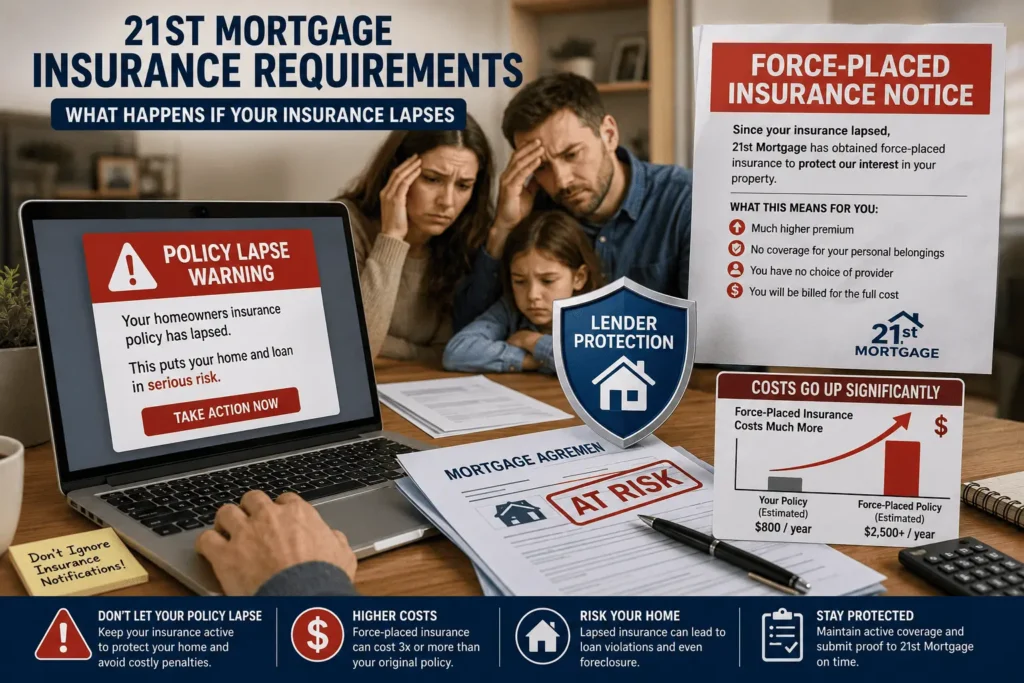
Letting coverage lapse is the fastest way to fall out of line with 21st Mortgage Insurance Requirements. If your policy lapses and you don’t renew on time, 21st Mortgage will step in and buy a policy on your behalf. This is called force-placed insurance, and it protects the lender’s financial interest in the home.
The catch is that force-placed coverage usually costs a lot more than a regular policy, and it often protects only the structure, not your personal belongings inside. The charge for this forced policy gets added straight to your loan balance, similar to how other charges show up on your 21st Mortgage Payment statement. If you ever get a notice about lapsed coverage, reach out right away.
Filing an Insurance Claim on a 21st Mortgage-Financed Home
If your manufactured home suffers damage, you file a claim with your insurance company first, not directly with 21st Mortgage. The insurer sends an adjuster to inspect the damage and estimate the repair cost. For larger claims, the payout check often gets made out to both you and 21st Mortgage together, since the lender has a financial stake in the home.
In that case, you may need to sign the check over to the lender before repair funds get released to your contractor in stages. This protects everyone involved and makes sure the money actually goes toward fixing the home. Keep copies of your claim number, adjuster contact, and repair estimates in one folder, since you may need to reference them more than once during the process.
If you run into paperwork questions during a claim, you can email for guidance, or check the 21st Mortgage Phone Number guide for the right department to call.
Conclusion
You now know exactly what 21st Mortgage Insurance Requirements cover, from minimum coverage amounts to escrow and force-placed insurance. You know PMI isn’t part of the deal, but a solid homeowners policy is non-negotiable. You also know you can shop around for your own provider instead of sticking with the lender’s affiliate. With this checklist in hand, you can walk into closing day without any insurance surprises.
Frequently Asked Questions
What does 21st Mortgage require for insurance coverage?
21st Mortgage Insurance Requirements include an active homeowners policy with replacement cost coverage, listing the lender as mortgagee. Home-only loans need coverage matching the loan balance or replacement cost, whichever is higher. This must be in place before closing and stay active for the life of the loan.
Does 21st Mortgage require flood insurance?
Flood insurance is only required if your home sits in a FEMA-designated flood zone. 21st Mortgage checks this during underwriting through a flood determination report. If your area isn’t flagged as high-risk, you won’t need a separate flood policy at all.
Can I use my own insurance company instead of 21st Insurance Agency?
Yes, you can choose any licensed insurance provider you like. 21st Insurance Agency is optional, not mandatory. Your only requirement is that the policy meets the lender’s minimum coverage rules and lists 21st Mortgage as mortgagee on the declarations page.
What happens if I let my insurance lapse?
If your policy lapses, 21st Mortgage buys force-placed insurance to protect the home. This coverage costs more than a regular policy and gets added to your loan balance. Renewing your policy on time avoids this extra charge completely.
Is escrow mandatory for taxes and insurance with 21st Mortgage?
Yes, most loans include a mandatory escrow account. This account collects monthly payments toward your annual property tax and insurance bills. 21st Mortgage Insurance Requirements typically include this escrow setup, so you rarely handle these payments on your own.