Flat Branch Mortgage Rates: A Complete Guide for Homebuyers
Most people spend more time picking a restaurant than comparing mortgage rates — and then wonder later why their monthly payment feels so high. Getting a home loan without knowing what a fair rate looks like is like buying a car without knowing the sticker price. If you are trying to figure out where flat branch mortgage rates actually stand and whether the quote you got is worth accepting, this guide gives you the full picture.
Here you will find exactly what Flat Branch charges across every loan type, what six factors determine your personal rate, and which programs can lower your cost before you even submit an application. Everything in this guide is built to help you walk into that conversation prepared — and leave with a deal you can trust.
What Are Flat Branch Mortgage Rates Today?
Flat Branch Home Loans is a Columbia, Missouri-based lender founded in 2005. It is the number one home purchase lender in Missouri and the top USDA lender in Missouri, Kansas, and Illinois. The company is employee-owned, and its loan officers carry over 1,000 years of combined mortgage experience.
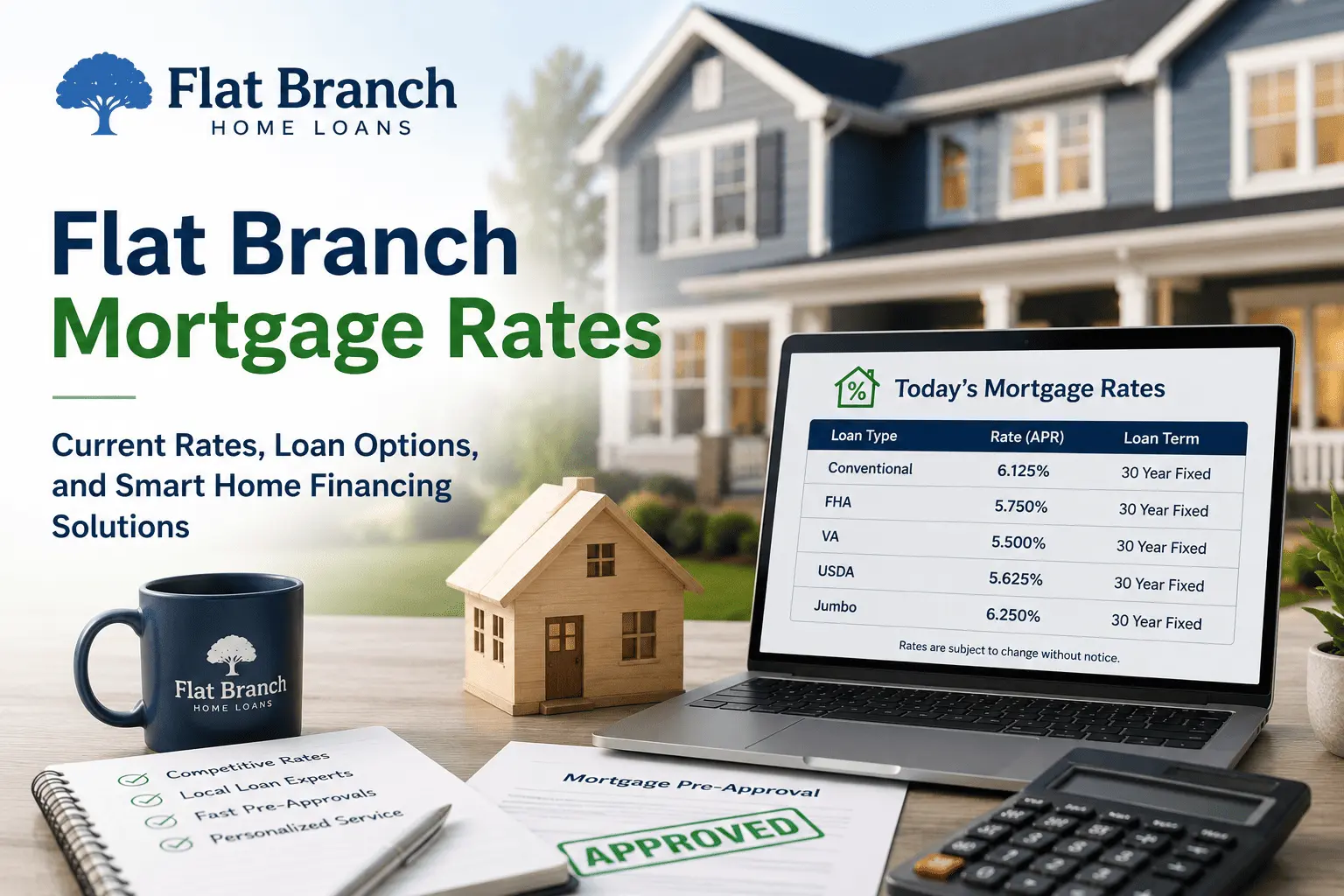
Flat Branch does not post live rates on its website. Rates change daily based on market conditions, your credit profile, and the specific loan type you choose. To get an accurate number, you contact a loan officer directly, submit a form online, or use their mobile app.
How Flat Branch Rates Compare to the National Average
In 2024, Flat Branch’s average rate on 30-year fixed loans was 6.69%. The national average for the same period was 6.55%, putting Flat Branch about 0.14% above the market-wide figure. As of June 2026, the national 30-year fixed average sits between 6.48% and 6.53%.
Flat Branch is classified as a low-fee lender. Their average closing costs on a 30-year fixed loan ran around $5,371, which is lower than many national lenders. A slightly higher rate paired with lower fees can actually cost you less overall — always compare the full APR, not just the interest rate.
Why Flat Branch Doesn’t Post Rates Online — And How to Get a Quote

Many borrowers get frustrated when a lender’s site shows no rate table. Flat Branch takes this approach because your rate depends on your credit score, loan amount, down payment, and property type — no single number applies to everyone.
Getting a quote is simple. You can reach Flat Branch through three channels:
- Online form — Submit basic loan details on their website for a callback from a loan officer
- Loan officer direct — Search the team directory and call or email someone in your area
- Mobile app — Start your application, track loan status, and message your loan officer in one place
Flat Branch Mortgage Rates by Loan Type
The loan program you choose directly affects your interest rate. Government-backed loans typically carry lower rates because federal guarantees reduce lender risk. Here is how each major program works at Flat Branch.
Conventional Loan Rates
Conventional loans make up the largest share of Flat Branch’s originations. These loans follow Fannie Mae and Freddie Mac guidelines and are available for primary homes, second homes, and investment properties. You can get in with as little as 3% down on a primary residence. Your rate ties closely to your credit score and LTV ratio — no government insurance means lenders price risk directly into your number.
FHA Loan Rates
FHA loans serve buyers with lower credit scores or smaller down payments. Flat Branch is a Full Eagle FHA lender, meaning they handle FHA underwriting in-house — which speeds up the process. You can qualify with 3.5% down and a 580 credit score. FHA loans carry a 1.75% upfront mortgage insurance premium plus a monthly MIP of around 0.55%, so always factor these costs into your rate comparison.
VA Loan Rates
VA loans are available to eligible veterans, active-duty service members, and surviving spouses. They consistently carry the lowest interest rates of any loan type because the VA guarantees a portion of each loan. There is no down payment required and no private mortgage insurance on VA loans.
A one-time VA funding fee of 2.15% applies for most first-time borrowers and can be rolled into the loan amount. Even with this fee, VA loans often remain the least expensive borrowing option over 30 years.
USDA Loan Rates
Flat Branch ranks among the top ten USDA lenders nationwide and holds the number one position in Missouri, Kansas, and Illinois. USDA loans require zero down payment for homes in rural and eligible suburban areas. Rates are competitive — often close to VA loan levels.
USDA loans carry a 1% upfront guarantee fee and a 0.35% annual fee. Flat Branch’s deep USDA experience means fewer processing delays and fewer surprises during underwriting.
Flat Branch Mortgage Rate Factors: What Affects Your Rate
No two borrowers get the same rate. Understanding what drives your number gives you real leverage to improve it before you apply. These six factors are what Flat Branch — and every lender — uses to set your interest rate.
Credit Score
Your credit score is the biggest single driver of your mortgage rate. Even a 20-point difference can shift your rate by 0.125% to 0.25%. Most conventional loans require a minimum of 620, but a score of 740 or higher unlocks the best available pricing. Pay down credit card balances and avoid new inquiries in the three to six months before applying.
Debt-to-Income (DTI) Ratio
Your DTI ratio compares your monthly debt payments to your gross monthly income. Flat Branch data shows their most common borrowers carry a DTI between 30% and 36%. Most conventional loans allow a back-end DTI up to 45% to 50%, but lower is better for your rate. Paying off a car loan or trimming a credit card balance before applying can move your DTI into a more favorable tier.
Down Payment and Loan-to-Value Ratio
Your loan-to-value (LTV) ratio is your loan amount divided by the home’s appraised value. Staying below 80% LTV eliminates private mortgage insurance and opens up better rate pricing. Even moving from 5% down to 10% down can produce a noticeable rate improvement.
If you have savings available, a larger down payment is one of the most direct ways to reduce your monthly cost from day one. Run different scenarios using the Flat Branch mortgage payment calculator to see how the numbers shift.
Loan Term
A 15-year fixed loan always carries a lower rate than a 30-year fixed. The lender’s risk exposure is cut in half and they price accordingly. The tradeoff is a higher monthly payment. Run both options using the payment calculator before you decide — the right term depends on your cash flow as much as your rate goal.
Temporary Interest Rate Buydown — Flat Branch’s 2-1 Buydown Program
A temporary rate buydown lets you pay an upfront cost at closing to reduce your interest rate for the first one or two years of the loan. In Flat Branch’s 2-1 Buydown program, your rate drops by 2% in year one and 1% in year two, then moves to the full note rate from year three onward.
The upfront buydown cost can be covered by the seller, builder, or a family member — not just you. This makes it especially useful in markets where sellers are offering concessions. It is a practical tool that many lenders overlook entirely.
Community Champions Rate Benefits
Teachers, EMTs, firefighters, police officers, and military personnel qualify for Flat Branch’s Community Champions Program. It provides up to $900 in lender credits and a waived appraisal fee at closing. These savings reduce your true borrowing cost without touching the interest rate itself.
Flat Branch Rate Lock — Lock and Shop Program Explained

A rate lock guarantees your interest rate for a set period, protecting you from market increases between application and closing. Most lenders only let you lock after you have a signed purchase contract. Flat Branch’s Lock and Shop program lets you lock before you even find a home.
This program is available in Arkansas, Illinois, Iowa, Kansas, Missouri, Nebraska, Oklahoma, and Texas. The process is straightforward:
- Get pre-approved and lock your rate upfront
- Shop for a home within the lock period, typically 60 to 90 days
- Close with your locked rate regardless of where the market moves
Ask your loan officer about float-down options — some locks let you capture a lower rate if the market drops before closing. Extending a lock after it expires typically costs 0.25% to 0.50% of the loan amount. Keep your financial profile stable after locking — do not open new credit lines or change jobs without checking with your loan officer first.
Are Flat Branch Mortgage Rates Competitive in 2026?
On rate alone, Flat Branch’s 2024 historical average of 6.69% was slightly above the national 6.55% figure. When you factor in lower closing costs and programs like Lock and Shop and the 2-1 Buydown, the overall value holds up well.
| Factor | National Average | Flat Branch |
|---|---|---|
| 30-Year Fixed Rate (2024 avg) | 6.55% | 6.69% |
| Avg Closing Costs | ~$6,000+ | ~$5,371 |
| USDA Lender Ranking | — | Top 10 Nationwide |
| Approval Rate | Average | Above Average |
| Rate Lock Before Contract | Rare | Available |
The Mortgage Bankers Association forecasts the 30-year fixed rate to hold near 6.4% through the rest of 2026. Flat Branch also launched a Refinance Guarantee in January 2026 — if you refinance by their deadline and rates drop again, they will refinance you a second time with no origination fees. That removes a significant risk for borrowers who lock in today.
Is Flat Branch Home Loans Right for You?
When evaluating flat branch mortgage rates, Flat Branch is a strong fit for buyers in the Midwest and South-Central states, especially those using USDA or VA loans. First-time buyers who want local, hands-on support from experienced loan officers will also find a lot to like here. Teachers, EMTs, and military borrowers benefit directly from the Community Champions Program.
You may want to shop around if you live outside Flat Branch’s service states or prefer browsing live rates before submitting personal information. Flat Branch does not offer HELOCs, so homeowners looking to tap equity through a line of credit will need another lender.
If you are ready to move forward, you can access your application through the Flat Branch mortgage login portal at any point in the process.
Conclusion
Flat branch mortgage rates are competitive when you look beyond the headline number and weigh the full value — low fees, experienced loan officers, and programs like the 2-1 Buydown and Lock and Shop that most lenders simply do not offer. We walked through everything from current rate benchmarks to the specific factors that shape your personal quote. Whether you are a first-time buyer, a veteran, or a public service worker in the Midwest, there is a real path to a strong deal here. Take what you learned, request your quote, and compare it against the benchmarks in this guide — you now have everything you need to evaluate it clearly.
Frequently Asked Questions
Q1: What Are Flat Branch Mortgage Rates Right Now?
Flat Branch does not publish live rates online because your rate depends on your credit score, loan type, down payment, and property details. As of June 2026, the national 30-year fixed average sits around 6.48%. Contact a Flat Branch loan officer directly or submit a quote request through their website or mobile app to get your personalized number.
Q2: Are Flat Branch Mortgage Rates Competitive Compared to Other Lenders?
Flat Branch’s 2024 average on 30-year fixed loans was 6.69%, slightly above the national 6.55% figure. However, their average closing costs of around $5,371 are lower than most lenders. When you compare the full APR instead of just the rate, Flat Branch holds up as a competitive option — especially for USDA and VA borrowers.
Q3: What Credit Score Do I Need to Get the Best Rate at Flat Branch?
A credit score of 740 or higher typically qualifies you for the most competitive pricing on conventional loans at Flat Branch. FHA loans accept scores as low as 580. VA and USDA loans offer more flexible credit requirements. Improving your score before applying is one of the fastest ways to lower your monthly payment.
Q4: How Does the Flat Branch Lock and Shop Program Work?
Lock and Shop lets you secure your mortgage interest rate before you find a home. You get pre-approved, lock your rate, then shop within the lock window — usually 60 to 90 days. This protects you from market rate increases while you search. The program is available in Missouri, Kansas, Illinois, Arkansas, Iowa, Nebraska, Oklahoma, and Texas.
Q5: What Is the Flat Branch 2-1 Buydown Program?
The 2-1 Buydown temporarily reduces your interest rate by 2% in year one and 1% in year two. From year three onward, you pay the full note rate for the remaining loan term. The upfront buydown cost can be covered by the seller or builder — making it a useful negotiating tool in today’s market.
![PHH Mortgage Services: Complete Guide [2026]](https://indianamortgagerate.com/wp-content/uploads/2026/05/phh-mortgage-services-loan-transfer-768x512.webp)