CMG Mortgage Calculator Guide: Estimate Your Monthly Home Payment
You just found a house you love, and now you need real numbers before you call a lender. Punching numbers into five different mortgage sites is confusing, and most of them do not match each other. I ran into this exact problem while comparing loan options last year, and it wasted an entire evening. The CMG Mortgage Calculator solves this by giving you one clear monthly payment estimate in seconds.
This guide walks you through exactly how the tool works, what each result means, and how to read your numbers with confidence. You will also learn which factors change your payment and how to compare CMG’s other loan tools. By the end, you will know exactly how to use this calculator the right way. That way, you can walk into your next call with a lender fully prepared.
What Is the CMG Mortgage Calculator?
This free online tool comes straight from CMG Financial. It helps you estimate your monthly mortgage payment before you apply for a loan. You enter basic numbers like home price, down payment, interest rate, and loan term. The tool then shows you a full payment breakdown in seconds.
This calculator works for both home purchases and refinances. It does not pull your credit or ask for personal information to get started. Think of it as a quick way to test different scenarios before you talk to a loan officer. It gives you a starting point, not a final loan offer.
Many buyers use it early in their search, long before they contact a lender. It removes the guesswork that usually comes with shopping for a home loan online.
If you want a closer look at CMG Financial as a lender, this CMG Mortgage review breaks down their loan programs, rates, and reputation in more detail.
What the CMG Mortgage Calculator Includes
Your final result is not just one number. It is made up of several smaller costs added together. Knowing each part helps you understand exactly where your money goes every month.
Principal and Interest
This is the core part of your payment. Principal is the amount you borrow to buy the home. Interest is the cost the lender charges for lending you that money. Together, these two numbers make up most of your monthly mortgage bill.
Property Taxes
Local governments charge property tax based on your home value. The calculator adds this into your monthly estimate automatically. Tax rates change depending on where you live. This is often the second biggest part of your payment.
Homeowners Insurance
Lenders require insurance to protect the home against damage. This cost gets added to your monthly payment along with taxes. The calculator uses an estimated rate if you do not enter your own. Your actual quote may be higher or lower based on your home and location.
PMI (Private Mortgage Insurance)
PMI applies if your down payment is below 20 percent. It protects the lender in case you stop paying the loan. The calculator adds this cost automatically when it applies. PMI usually drops off once you reach enough home equity.
HOA Fees (If Applicable)
Some neighborhoods charge a monthly HOA fee for shared services. This can include landscaping, security, or community amenities. You can add this manually since the calculator does not know your HOA fee. It is a small step that makes your estimate much more accurate.
How to Use the CMG Mortgage Calculator (Step by Step)

Using this tool only takes a few minutes. Follow these steps to get an accurate estimate.
- Enter your home purchase price or current loan balance
- Add your planned down payment amount
- Input your expected interest rate
- Choose your loan term, such as 15 or 30 years
- Add property tax, insurance, and HOA costs if known
- Review your monthly payment breakdown instantly
Once you submit these details, the tool calculates your full monthly payment. You can adjust any number and see the results update right away. This makes it easy to test different down payment or rate scenarios. Try a few combinations before deciding what fits your budget.
Example: Sample CMG Mortgage Payment Calculation
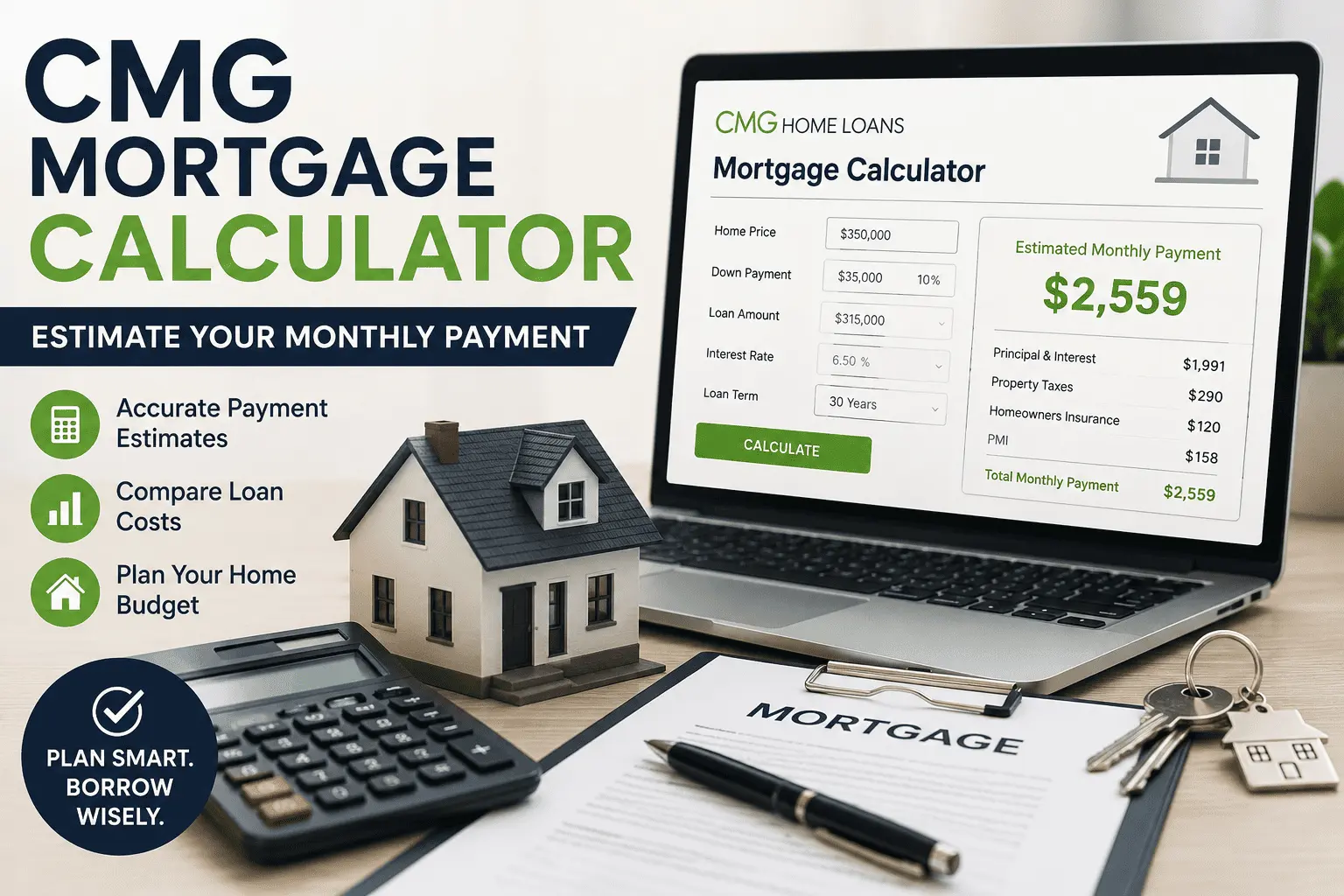
Numbers make more sense with a real example. Say you are buying a $350,000 home with a 10 percent down payment. Your loan amount would be $315,000 at a 6.5 percent interest rate over 30 years. Here is how your estimated monthly payment could break down.
| Payment Component | Estimated Amount |
| Principal and Interest | $1,991 |
| Property Taxes | $290 |
| Homeowners Insurance | $120 |
| PMI | $158 |
| Total Monthly Payment | $2,559 |
This example shows why each part of your payment matters. A small change in your down payment or rate can shift this total by hundreds of dollars. Running your own numbers through the calculator gives you a picture built around your actual situation. Always treat this as an estimate, not a locked-in number.
Understanding Your Amortization Schedule
An amortization schedule shows how each payment splits between principal and interest over time. In the early years, most of your payment goes toward interest. As the loan matures, more of each payment reduces your principal balance. This shift happens slowly but adds up significantly by year 15 or 20.
Reviewing this schedule helps you understand the true cost of your loan. It also shows how extra payments early on can save you thousands in interest. Many borrowers skip this step and miss an easy way to pay off their home faster. Ask your loan officer for a full schedule based on your actual rate.
Most lenders can send you a printable version once your loan is set up. Keeping a copy handy makes it easier to track your progress each year.
Factors That Affect Your CMG Mortgage Calculator Results

Several factors change what the calculator shows you as your final payment. Understanding these helps you know which numbers are worth adjusting first.
Interest Rate
Your interest rate has the biggest impact on your monthly payment. Even a small rate change of half a percent can shift your payment by $100 or more. Rates depend on your credit score, loan type, and current market conditions.
You can review current CMG mortgage rates to see how today’s market compares before running your numbers.
Credit Score
Lenders use your credit score to decide your interest rate and loan terms. A higher score usually means a lower rate and a lower monthly payment. Scores below 620 may lead to higher rates or added mortgage insurance. Improving your score even slightly before applying can lower your long-term cost.
Down Payment Amount
Your down payment directly affects your loan amount and monthly payment. A larger down payment lowers your principal and may remove PMI. Putting down at least 20 percent avoids this extra insurance cost entirely. Even a small increase in your down payment can meaningfully reduce your monthly bill.
Loan Term (15-Year vs 30-Year)
A 15-year loan comes with a higher monthly payment but far less interest overall. A 30-year loan spreads payments out and keeps your monthly cost lower. Your choice depends on your budget and how fast you want to build equity. Testing both terms in the calculator shows the real difference in total cost.
Purchase vs Refinance: Using the Calculator for Both
The calculator works whether you are buying a new home or refinancing an existing loan. For a purchase, you enter your expected home price and down payment. For a refinance, you enter your current loan balance and new expected rate. Both paths use the same tool, just with different starting numbers.
Refinancing often makes sense when rates drop or your credit score improves since your original loan. Running your numbers before refinancing helps you see if the savings are worth the closing costs. Compare your current payment against your estimated new payment side by side. This simple step can save you from a refinance that does not actually help your budget.
Some homeowners refinance to shorten their loan term instead of chasing a lower payment. Others use it to remove PMI once their home value has grown. Either goal is worth testing through the calculator first.
Other CMG Mortgage Calculators You Can Use
CMG Financial offers several other tools beyond the main payment calculator. Each one answers a different question about your loan. Trying a few of them together gives you a fuller view of your options.
CMG 15 vs 30 Year Mortgage Calculator
This tool compares your monthly payment and total interest cost across both loan terms. It shows exactly how much faster you build equity with a 15-year loan. You also see how much lower your payment is with a 30-year term. This side-by-side view helps you pick the term that matches your financial goals.
CMG Home Purchasing Power Calculator
This calculator flips the process around by starting with your budget instead of a home price. You enter your income and monthly debts to see what price range fits comfortably. It helps first-time buyers set realistic expectations before house hunting, and pairing it with
FHA loan resources for first-time buyers can round out your planning. This step avoids falling in love with a home outside your true budget.
CMG Mortgage Loan Amount Calculator
This tool estimates how much you may qualify to borrow based on your income and debts. It gives buyers a starting point before a full application. The result depends on your debt to income ratio and credit profile. Use this alongside the main calculator for a complete picture of affordability.
CMG Mortgage Buydown Calculator
A buydown temporarily lowers your interest rate for the first few years of your loan. This calculator shows how much you save during that lower rate period. It also shows what your payment becomes once the rate returns to normal. This option can help if you expect your income to grow soon.
CMG Biweekly Payment Calculator
Biweekly payments split your monthly amount into two smaller payments every two weeks. This adds up to one extra full payment each year without much added strain. The calculator shows how many years this shaves off your loan. It also shows the total interest you could save over time.
How Accurate Is the CMG Mortgage Calculator?
This calculator gives a close estimate, not a guaranteed number. Actual rates depend on your credit check, income verification, and property details. Taxes and insurance also vary based on your exact location and provider. Treat your result as a strong starting point, not your final loan terms.
For an exact number, you still need a formal quote from a loan officer. The calculator is best used to compare scenarios and narrow down your budget range. Once you have a target range, a real quote confirms the actual cost. This two-step approach saves time and avoids surprises later.
Tips to Lower Your Estimated Monthly Payment
Nobody wants to pay more than they have to each month. A few simple changes can meaningfully reduce your estimated monthly payment.
- Increase your down payment to reduce your loan amount
- Improve your credit score before applying for a better rate
- Choose a longer loan term to lower monthly cost
- Shop multiple rate quotes instead of accepting the first offer
- Ask about a temporary rate buydown for early savings
Small adjustments in these areas can lower your payment by a noticeable amount. Testing each change inside the calculator shows the real impact before you commit. This lets you build a plan that fits your actual budget. Even one or two of these steps can make a real difference.
Get a Personalized CMG Mortgage Quote
A calculator gives you a strong estimate, but a loan officer gives you real numbers. Reach out with your details so a professional can review your exact situation. You can also email james@allthings-mortgage.com with any questions about your next steps. A quick conversation now can save you from surprises later at closing.
Bring your estimated numbers from the calculator into that conversation. It gives the loan officer a clear starting point and speeds up the whole process.
If you want to know more about the team behind this guidance, read about James Peters and All Things Mortgage. Once your loan closes, you can also review
CMG mortgage payment options to keep things running smoothly afterward.
Conclusion
Understanding your numbers before you apply saves you time and stress. The CMG Mortgage Calculator gives you a clear starting point in just a few minutes. You now know how to read every part of your payment and test real scenarios. Use this tool with confidence as you plan your next home purchase or refinance.
Frequently Asked Questions
Is the CMG mortgage calculator free to use?
Yes, this calculator is completely free with no signup required. You can run unlimited estimates and adjust your numbers as many times as you want. It does not require a credit check or personal contact information to view your results.
Does the CMG calculator show my actual interest rate?
No, the calculator uses an estimated or entered rate, not your guaranteed rate. Your actual interest rate depends on your credit score, income, and loan type after a full application. Contact a loan officer for your exact personalized rate.
Can I include taxes and insurance in the CMG calculator?
Yes, you can manually add property tax, homeowners insurance, and HOA fees. If you leave these blank, the calculator uses estimated averages for your area. Adding your real numbers gives you a much more accurate monthly payment estimate.
How is my CMG mortgage payment calculated?
Your payment combines principal, interest, property taxes, homeowners insurance, and PMI if it applies. The calculator adds these parts together based on the numbers you enter. This total gives you your full estimated monthly mortgage payment.
Can first-time buyers use this calculator?
Yes, first-time buyers can use this calculator to test different home prices and down payments. It helps you understand your budget before you start house hunting. It works well alongside other beginner-friendly loan tools too.